Originally from Mexico City, Natalia López is a winemaker specialized in low-intervention wines, organic viticulture, terroir studies, molecular-level food and wine pairing, and olfactory perception. She studied Food Chemistry with a specialization in Microbiology and Sensory Analysis at UNAM, and holds a Master of Science in Enology, Viticulture, and Terroir, completed across France, Italy, Portugal, and Spain. Currently, she deepens her sensory approach by integrating methodologies from Somatic Education.
She is the owner and winemaker at Cava Garambullo, and director of Vinograd, an academy she founded as a platform for specialization for wine professionals.
Cava Garambullo | Vinograd Academy
IG: @vinograd_mx | @cava_garambullo
Professional Context
Natalia has a profound passion for science, creativity, and human perception. This drive has led her, from a very young age, to explore the world of wine from a multidisciplinary, anthropological, academic, and systemic perspective.
With more than seventeen years of experience in the wine sector, she has collaborated with wineries in Mexico and abroad, and has expanded her practice to winemaking, the design of synergistic pairings, educational wine tastings, specialized teaching, and scientific research.
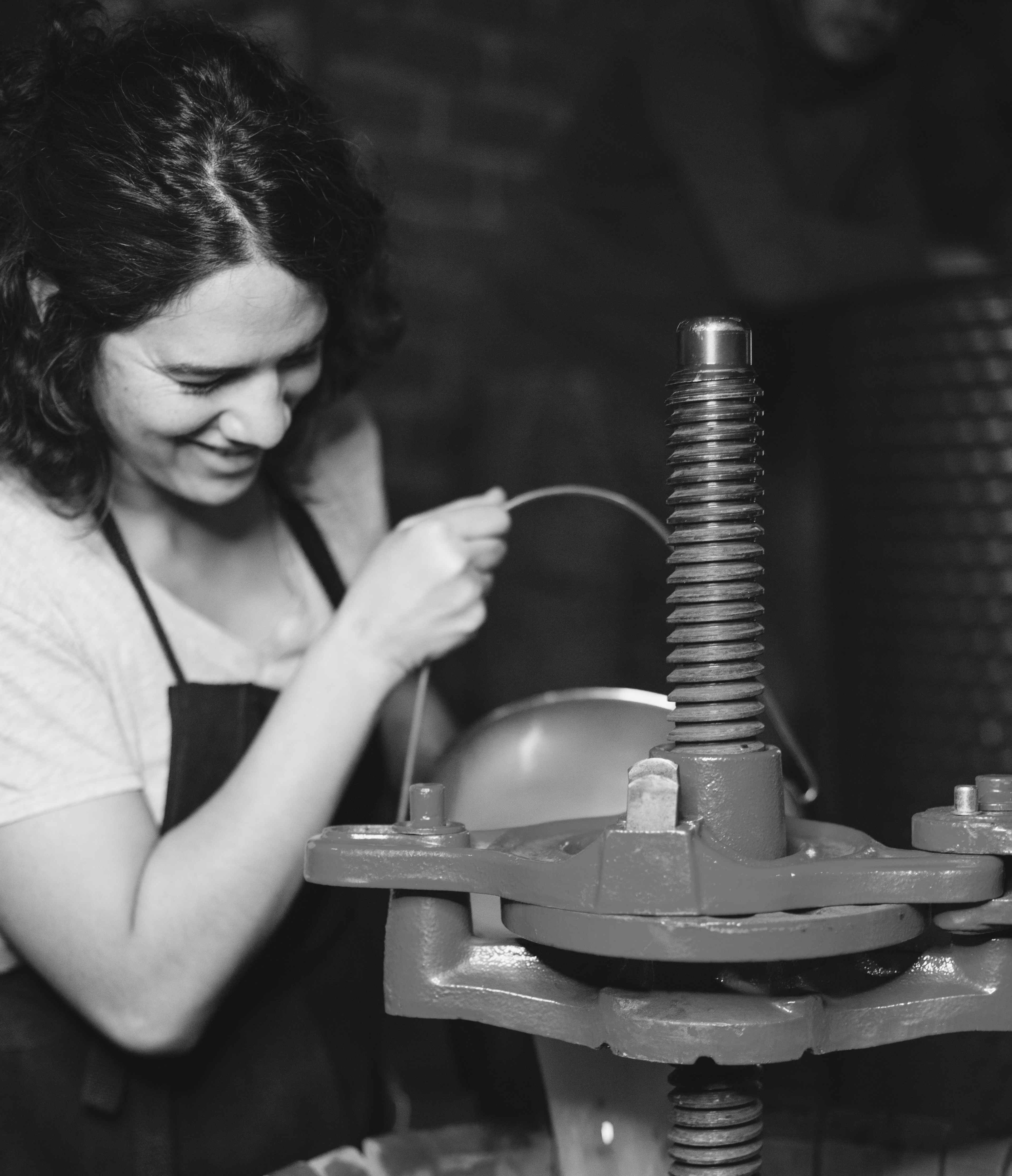
She is the co-founder and winemaker of Cava Garambullo, a natural winemaking project based in San Miguel de Allende. Producing around 8,000 bottles a year, the project is rooted in close observation, interpretation, and the sensory translation of the Central Mexican terroir.
Passionate about learning through direct experiences, she has visited more than fifty wine regions and over 250 wineries around the world. Among the places that have shaped her path are Italy, France, Hungary, Portugal, Austria, Serbia, Croatia, and Mexico.
With a strong educational vocation, she created Vinograd Academy, a platform for wine professionals where she explores specialized topics, sensory pedagogy, and critical thinking. Rather than delivering answers, her classes seek to open questions that challenge paradigms and encourage continuous learning through experience.
Natalia also explores her written voice. She has published articles in gastronomic media, collaborated as a technical advisor on the book La Ruta del Vino de Guanajuato, and contributed to research on the Central Mexico wine region. She has written two published prologues, short stories, and is currently developing a Wine Thesaurus, a literary project tracing correspondences between language and the senses, exploring how metaphor can expand the ways we perceive, name, and inhabit wine.
Research Travels
Countries: Spain, France, Hungary, Italy, Portugal, Austria, United States, Croatia, Serbia, and Mexico.
Notable wine regions visited: Bourgogne, Beaujolais, Bordeaux, Jurançon, Languedoc-Roussillon, Sancerre, Loire Valley, Cariñena, Priorat, Valencia, Valdepeñas, Montilla-Moriles, Jerez, Ribera del Guadiana, Toro, Rioja, Rías Baixas, Bierzo, Ribera del Duero, Douro, Porto, Vinho Verde, Trentino-Alto Adige, Emilia-Romagna, Tuscany, Friuli, Piedmont, Umbria, Puglia.
Notable wineries visited: Petrus, Château Margaux, Château Yquem, Château Guiraud, Domaine de la Romanée-Conti, Château Angélus, Hospices de Beaune, Oremus, Disznókő, J. Hofstätter Wine Estate, Alois Lageder, and Coulée de Serrant.
If she could be an aroma, she would choose the scent of lemon blossom.
 Vinograd